Σύστημα Λέβητα Καυσαερίων και Παραγωγής Ατμού
1. Γενική Περιγραφή και Λειτουργία
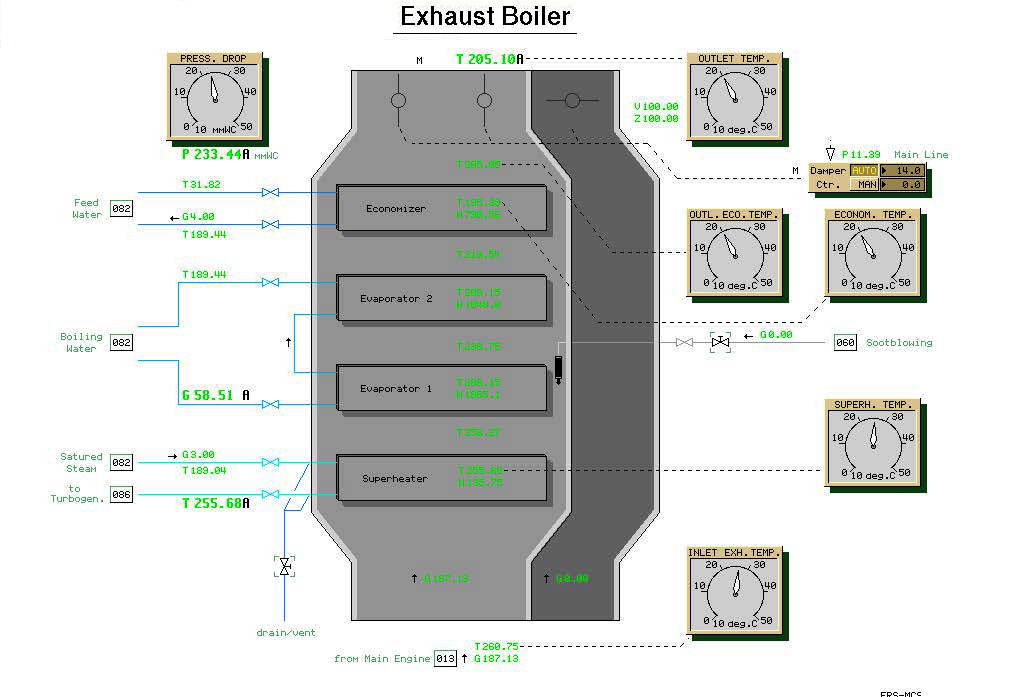
Η θερμική ενέργεια των καυσαερίων της κύριας μηχανής ανακτάται σε έναν λέβητα καυσαερίων (exhaust boiler) πριν αυτά καταλήξουν στην τσιμινιέρα. Σε συνθήκες πλήρους ισχύος, ο ατμός που παράγεται στον λέβητα καυσαερίων επαρκεί για την κίνηση της στροβιλογεννήτριας (turbo-generator) και την κάλυψη των διαφόρων αναγκών θέρμανσης του πλοίου.
Σε περιπτώσεις μειωμένης ισχύος της κύριας μηχανής ή όταν ο λέβητας καυσαερίων είναι ακάθαρτος, ενδέχεται να απαιτηθεί η παράλληλη λειτουργία του βοηθητικού λέβητα (auxiliary boiler / oil-fired boiler). Σημειώστε ότι ο ανεμιστήρας του λέβητα και η αντλία παροχής καυσίμου (FO supply pump) ξεκινούν αυτόματα μέσω του συστήματος διαχείρισης καυστήρα (Burner Management). Όταν ο βοηθητικός λέβητας σταματά λόγω αύξησης της ισχύος της κύριας μηχανής, η αντλία και ο ανεμιστήρας πρέπει να διακοπούν χειροκίνητα.
2. Δομή του Λέβητα Καυσαερίων
Ο λέβητας καυσαερίων αποτελείται από τα εξής τμήματα:
- Υπερθερμαντήρας (superheater): Ο κορεσμένος ατμός από το δευτερεύον τύμπανο (steam generator) θερμαίνεται εδώ και στη συνέχεια τροφοδοτεί τη στροβιλογεννήτρια.
- Εξατμιστής (evaporator): Αποτελείται από δύο περάσματα. Νερό σε θερμοκρασία κοντά στο σημείο βρασμού αντλείται από το δευτερεύον τύμπανο, μετατρέπεται σε μείγμα ατμού-νερού και επιστρέφει στο τύμπανο για διαχωρισμό.
- Οικονομιτήρας (economiser): Τροφοδοτείται με νερό από τη δεξαμενή τροφοδοσίας (feed water tank) μέσω της κύριας αντλίας τροφοδοσίας (FW pump). Το νερό προθερμαίνεται από τα καυσαέρια πριν εισέλθει στο δευτερεύον τύμπανο. Υπό κανονικές συνθήκες, στον οικονομιτήρα δεν παρατηρείται βρασμός.
3. Έλεγχος και Απόδοση
Η μεταφορά θερμότητας σε κάθε τμήμα εξαρτάται από την τοπική θερμοκρασία και τη ροή των καυσαερίων. Η απόδοση στον εξατμιστή μειώνεται απότομα εάν σταματήσει η αντλία κυκλοφορίας (recirculation pump), προκαλώντας σταδιακή πτώση της πίεσης του ατμού. Για τη διατήρηση της μέγιστης ισχύος, ο λέβητας πρέπει να καθαρίζεται τακτικά με τους πνευματικούς φυσητήρες αιθάλης (sootblowers).
4. Έλεγχος Κλαπέτου και Κατανομή Φορτίου
Η πίεση του δευτερεύοντος ατμού διατηρείται σταθερή μέσω ενός ελεγκτή PID, ο οποίος ρυθμίζει τη θέση των κλαπέτων (dampers) των καυσαερίων. Όταν η ζήτηση ατμού είναι χαμηλή, μεγαλύτερη ποσότητα καυσαερίων παρακάμπτεται (by-pass) απευθείας προς την τσιμινιέρα.
Όταν ο βοηθητικός και ο λέβητας καυσαερίων λειτουργούν ταυτόχρονα, εμφανίζεται το φαινόμενο του απροσδιόριστου διαμοιρασμού φορτίου. Εάν οι τιμές ρύθμισης (set points) της πίεσης στους δύο ελεγκτές είναι ίδιες, οι λέβητες «ανταγωνίζονται» μεταξύ τους, προκαλώντας άσκοπες ταλαντώσεις (oscillations) στην πίεση και τη λειτουργία.
Στην πράξη, οι μεγάλες μηχανικές ανοχές – ο γνωστός «τζόγος» (backlash) – στα γρανάζια κίνησης του κλαπέτου μπορούν να προσομοιωθούν στον αυτοματισμό μέσω της ρύθμισης της υστέρησης (hysteresis). Η υστέρηση λειτουργεί ως ένα «νεκρό όριο» στην απόκριση του συστήματος, εμποδίζοντας το κλαπέτο να κινείται με την παραμικρή μικροδιαφορά πίεσης, προστατεύοντας έτσι τον μηχανισμό από πρόωρη φθορά.

